Autumn. Live.
Primitives
Instruments for the fundamentals of design.


The problem
Everyday design questions, like whether two colours are readable together or what a type scale steps to, are answered by scattered one-off sites. Each has its own layout, its own rounding, and rarely an answer you can send to someone.
The approach
One instrument per question, grouped by primitive, in one harness: the same controls, the same explanation and a stateful address everywhere. The maths sits in one package, JSON in and JSON out, so agents can later ask the same questions people do.
What we learned
The harness is most of the work; once it was right, a new instrument became a folder. Precision is mostly rounding: a colour written to the address has to come back as the same colour, or a contrast check passes on one screen and fails on the next.
Next
Grid, shape and motion in turn. A public requests board orders what comes after, and the maths opens up as endpoints for agents.
primitiv.es- Status
- Live; Color and Type are out, eleven instruments
- Runs on
- The web
- Since
- September 2026
- Built with
- Astro and Svelte on one Cloudflare Worker, D1 for requests; the maths in one package, JSON in and JSON out
- Signature
- 13 primitives and 50 instruments planned, shipped one at a time
- Also
- GitHub
The print
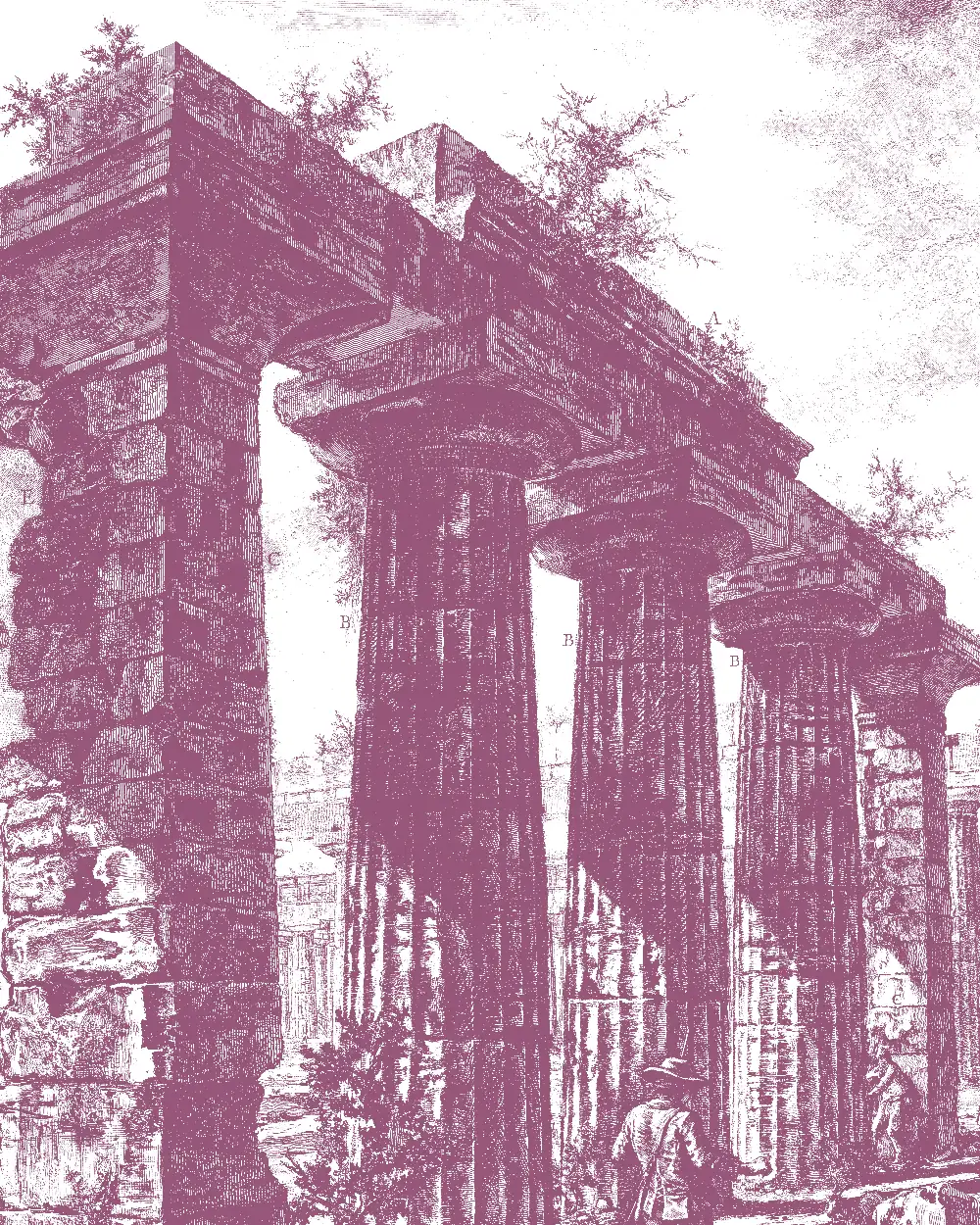
Paestum, Italy
Greek temples about 2,500 years old, down to the column and the beam.
Piranesi, 1778. All three inks: burgundy, sunflower, bright red. Source. CC0.